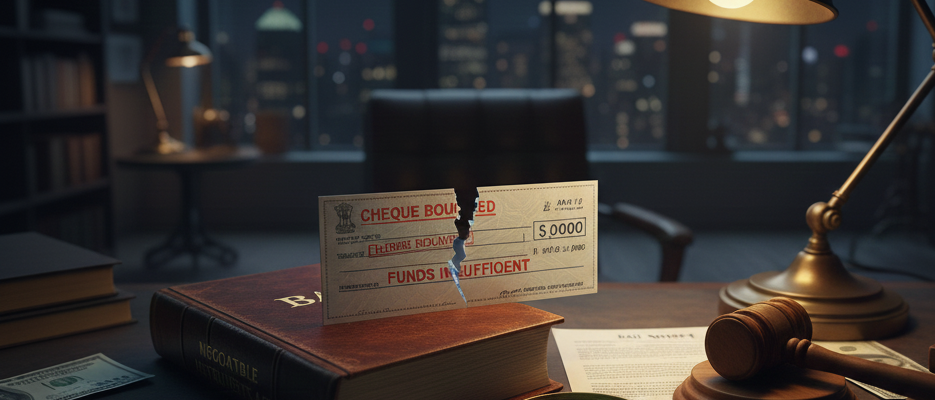
Cheque bounce, legally termed as “dishonour of cheque,” is one of the most common financial disputes in India. Governed under Section 138 of the Negotiable Instruments Act, 1881, it is treated as a criminal offence when a cheque issued for lawful consideration is returned unpaid by the bank. A bounced cheque not only disrupts financial trust but can also lead to strict legal consequences for the drawer.
A cheque may bounce for several reasons—insufficient funds, signature mismatch, account closure, overwriting, or a mismatch in figures. However, when the reason is insufficient funds, the law allows the aggrieved party to initiate legal action. The first step begins with receiving a written return memo from the bank stating the reason for dishonour.
Once the cheque is returned unpaid, the payee must send a legal demand notice to the drawer within 30 days, asking them to clear the amount within 15 days. This notice is mandatory and acts as the final opportunity for the drawer to settle dues without entering litigation. If the drawer fails to make the payment within the stipulated time, the payee gains the right to file a criminal complaint before the magistrate.
A cheque bounce case under Section 138 can lead to penalties such as imprisonment up to 2 years, fine up to double the cheque amount, or both. In many cases, courts encourage mediation or compounding, allowing parties to settle disputes amicably. This ensures quicker resolution and avoids prolonged legal battles.
For businesses and individuals alike, maintaining financial discipline is essential. Similarly, for payees, understanding their rights ensures timely action and protection against fraud or default. Cheque bounce laws serve as a strong deterrent, reinforcing trust in commercial transactions.
In today’s digital age, even though online payments are popular, cheques continue to hold legal and financial significance. Awareness of your rights, timely action, and proper documentation can help you navigate cheque dishonour issues effectively.